
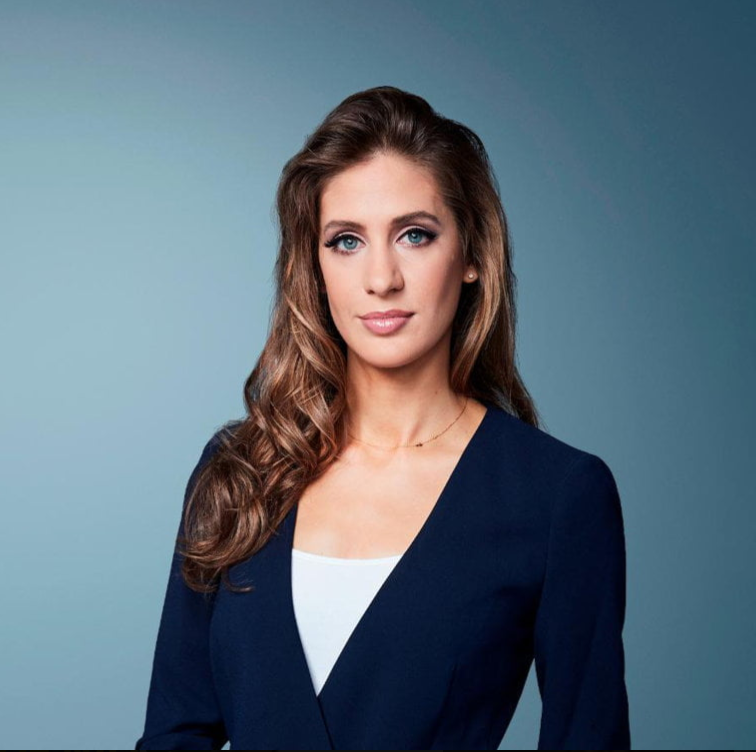
Bianca Nobilo is a British journalist, broadcaster, and former CNN anchor and correspondent, now focused on history, geopolitics, and international affairs as the host and managing editor of History Uncensored, and if you have not heard that name yet, you will soon.
There is something quietly compelling about a journalist who walks away from one of the most recognizable news networks on the planet, not because things went wrong, but because something bigger was calling. That is exactly what Bianca Nobilo did. She spent nearly a decade anchoring international news at CNN, covered some of the most consequential stories of the last ten years, and then made a sharp pivot that most media professionals would consider risky.
She went independent, took on a corporate role in tech, and launched a history series under the Piers Morgan Uncensored brand that is already pulling serious attention on YouTube. That is not a career trajectory you see every day, and it is precisely why people keep searching her name.
This article is the most thorough, up-to-date, and honest look at Bianca Nobilo you will find anywhere. We are covering everything from her background, career, net worth, height, age, personal life, her Instagram presence, the illness rumors, and the story of how a New Zealand-born daughter of a professional golfer became one of the most credible voices in international journalism and historical storytelling.
About Bianca Nobilo
Before the CNN years, before the bylines, before the polished on-screen presence that became familiar to global news viewers, there was a young woman growing up in a household where international travel, performance under pressure, and the discipline of craft were not abstract concepts. They were dinner table conversations.
Bianca Nobilo was born on May 1, 1990, in Auckland, New Zealand. Her father is Frank Nobilo, the well-known professional golfer who competed at the highest levels of the sport for decades and later became a respected golf analyst for CBS and the Golf Channel in the United States. Growing up with a father who was a touring professional meant that Bianca understood early what it looked like to commit fully to a discipline, to endure public scrutiny, and to represent yourself with composure regardless of the circumstances around you. Those are not small lessons, and they clearly took root.
Her upbringing was shaped by the kind of international mobility that comes with having a parent in a global sport. The family spent time between New Zealand and the United Kingdom, and Bianca ultimately built her adult life and career in Britain. She holds British nationality and is consistently described in professional contexts as a British journalist, even though her New Zealand roots are a genuine and formative part of who she is.
She pursued higher education in the United Kingdom, where she developed an academic grounding in history and international affairs that would later become the intellectual backbone of her journalism. This was not someone who fell into news broadcasting by accident or because she happened to be on camera at the right time. She studied, she read deeply, she developed real expertise in the kinds of geopolitical questions that drive world events, and then she brought that expertise to television.
Her early career moved quickly. She entered the broadcast journalism world with a clear sense of purpose, landing at CNN before she turned thirty and working her way into a role that put her in front of a genuinely global audience. That combination of academic depth and professional credibility would become the defining characteristic of her public identity.
What makes Bianca Nobilo interesting as a person, beyond the career milestones, is the combination of intellectual seriousness and genuine warmth that comes through in her work. She is not a broadcaster who reads copy and moves on. She connects ideas across disciplines, she brings historical context into current events, and she engages with her audience as if they are intelligent adults who deserve the full picture. That approach is rarer than it should be in modern media.
Her family background contributed something else important: a personal encounter with the fragility of life that pushed her toward community action at a young age. As a student, Bianca witnessed a family member suffer a sudden and serious cardiac episode. That experience had a lasting impact on her. She became involved in volunteering work related to heart health screenings, helping raise awareness about the importance of early detection. It was an early signal that her instincts were not just toward storytelling but toward doing something useful with the attention and resources she had access to.
None of that defines her health. She is not ill. She has not reported any ongoing health conditions. The cardiac story is about her family, not her own body, and we will address the illness question more directly later in this article. But it belongs here in this broader portrait because it tells you something real about what motivates her beyond the camera lights.
Bianca Nobilo Age
Bianca Nobilo was born on May 1, 1990, which means that as of May 2026, she turns 36 years old. This is consistent across every credible biographical source, and there is nothing ambiguous about it.
She is squarely in what most working professionals would consider their prime years, old enough to have deep expertise and genuine seniority, but young enough to still be building toward the most impactful chapters of a long career. For a journalist and media personality, thirty-six is an interesting and powerful place to be.
Think about what she has already accomplished by thirty-six. She anchored international news programming at CNN, covered Brexit from London as it unfolded in real time, reported on global politics through one of the most turbulent periods in recent history, made a deliberate career transition into the corporate world, and launched an independent media project that has already attracted a meaningful audience. That is a résumé most people would not have assembled by fifty.
The age question comes up frequently in searches because people who watch her on screen or encounter her work online are often surprised by how much she has done relative to how young she appears. She carries herself with a kind of poise and authority that reads as seasoned, which creates a natural curiosity about how long she has actually been in the game.
The answer is that she has been in it long enough to know what she is doing, but not so long that she has stopped taking creative risks. The pivot to History Uncensored in late 2025 is proof of that. A journalist who was simply coasting on institutional credibility would not be launching a YouTube series about NATO history and the origins of the Oscars. She is genuinely curious, still experimenting, still building.
Bianca Nobilo Height
Here is an honest answer to an honest question: the exact figures on Bianca Nobilo’s height are not officially confirmed, and anyone who tells you otherwise is guessing.
Biographical databases and celebrity information sites list her height somewhere in the range of 5 feet 3 inches (approximately 1.63 meters) to 5 feet 7 inches (approximately 1.70 meters). That is a fairly wide range, and it reflects the reality that she has never made an official statement about her height, and precise measurements for broadcast journalists are not exactly a matter of public record.
What can be said with confidence is that she presents herself professionally on camera in a way that is entirely consistent with experienced broadcast journalists. She has strong screen presence, a controlled and articulate delivery, and the kind of physical composure that comes from years of working under studio conditions and in field environments. Height, in that context, is almost irrelevant to understanding her as a professional.
The reason the height question gets searched so frequently is worth thinking about for a second. People encounter her on screen and develop a sense of her physical presence that they then want to contextualize with a number. It is human and understandable, but it is also worth noting that the numbers floating around online are estimates, not measurements. She has not confirmed any specific figure, and the range of estimates reflects that ambiguity.
What we can say is that whether she stands closer to 5’3″ or 5’7″, she occupies the space she works in with unmistakable authority. The camera likes her, and more importantly, the substance of her work commands attention regardless of what the tape measure says.
Bianca Nobilo Net Worth
Bianca Nobilo’s net worth is one of the most searched questions about her, and it deserves a thoughtful answer rather than a made-up number pulled from a celebrity aggregation site.
Let us be straightforward: there is no verified, publicly confirmed figure for Bianca Nobilo’s net worth. She has not disclosed her earnings, CNN did not publish her salary, and IFS has not announced her compensation as Head of External Affairs. Any specific dollar amount you see on gossip sites or wiki-style databases is an estimate at best and fabrication at worst.
That said, we can reason through what a realistic picture looks like based on her career trajectory and professional positioning.
CNN anchors and international correspondents at Bianca’s level of seniority earn substantial salaries. The network is headquartered in Atlanta and operates globally, and its London bureau staff, particularly those with on-air anchor responsibilities, command compensation commensurate with their profile and experience.
Industry reporting on broadcast journalism salaries suggests that experienced CNN anchors can earn anywhere from the mid-six figures into the higher end of that range, depending on tenure, profile, and contract terms. Bianca was at CNN for nearly a decade, which means she had meaningful seniority and a corresponding pay scale.
Her move in April 2024 to IFS, a well-funded enterprise software company, as Head of External Affairs represents a corporate role that typically comes with a senior compensation package. Corporate communications and government relations heads at large technology companies, particularly those with the public profile and journalism credentials Bianca brings to the role, routinely earn competitive salaries with performance incentives. This was not a step down financially; it was a lateral or upward move in compensation terms.
History Uncensored, the YouTube and podcast series she launched in December 2025 under the Piers Morgan Uncensored brand, adds another revenue stream. YouTube channels with meaningful viewership generate advertising revenue, and association with an established media brand like Piers Morgan Uncensored provides promotional infrastructure that accelerates audience growth. Additionally, media personalities at her level often generate income through speaking engagements, appearances, and brand partnerships.
Combining a decade of CNN-level earnings, a senior corporate role at a tech company, and the early stages of an independent media venture, a conservative estimate would suggest Bianca Nobilo has accumulated net worth somewhere in the range of one to three million dollars, possibly more depending on investment and saving habits. But again, that is reasoned estimation, not verified fact. Do not mistake informed inference for confirmed reporting.
What matters more than a specific number is the trajectory: she is a financially independent professional who has made deliberate, strategic career moves that reflect confidence in her long-term earning power and in the value of her brand. That is a more meaningful financial story than any single net worth figure.
Bianca Nobilo Instagram
Bianca Nobilo’s Instagram presence, at the handle @biancanobilo, is a well-curated extension of her professional identity and, occasionally, her personal one.
As of early 2026, she has approximately 197,000 followers with more than 287 posts. Her bio prominently references her role at History Uncensored and her focus on history, geopolitics, and conflict. Those numbers reflect a genuinely engaged audience rather than inflated follower counts built on passive scrolling.
What is interesting about her Instagram strategy is that it mirrors her broader professional philosophy: substance first, aesthetics second. Her feed is not dominated by lifestyle content, fashion partnerships, or the kind of aspirational imagery that fills the accounts of celebrities who use Instagram primarily as a personal brand vehicle. Instead, she posts about show episodes, historical deep dives, behind-the-scenes glimpses of her media work, and occasional professional updates that give followers real context about what she is working on.
This approach has built a following that is smaller than some celebrity journalists but far more loyal and engaged. When you look at the comments on her posts, you see actual conversations about history and current events, not the shallow affirmations that dominate most influencer comment sections. Her audience came for the ideas, and the ideas keep them there.
She does share personal updates occasionally. Not in the oversharing way that has become common among media personalities trying to humanize their brands, but in the selective and thoughtful way of someone who values her privacy while still understanding that some degree of personal connection with an audience is genuine and worthwhile. She talks about what she is reading, what she is thinking about, what excites her professionally.
Her Instagram is also where she cross-promotes her History Uncensored content most actively. As the show grows, the Instagram account functions as both a discovery tool for new viewers and a community hub for existing ones. She uses short-form clips, episode highlights, and historical images with context to keep her audience engaged between full episodes.
Beyond Instagram, she maintains presence on X/Twitter at @bianca_nobilo, TikTok at @bianca_nobilo, LinkedIn, and Threads. Each platform serves a slightly different audience and purpose, but the consistent thread across all of them is intellectual seriousness packaged in an accessible voice. She does not dumb things down; she finds ways to make complex topics feel relevant and immediate.
The social media footprint she has built is one of a serious journalist who has made the transition to independent media with a clear understanding of how digital platforms work and what her particular audience wants from them.
Bianca Nobilo Husband
Bianca Nobilo has no publicly confirmed husband, marriage, or current partner. She is not known to be married. She does not discuss her romantic life in interviews. She does not post about a partner on social media. She has not made any public announcements related to a relationship.
She is, by all available evidence, intentionally private about this dimension of her life.
That privacy is, frankly, a choice that deserves respect rather than investigation. We live in a media environment where the personal lives of public figures are treated as fair game by default, as if the decision to work in television or journalism means surrendering every boundary between professional and private. Bianca Nobilo has clearly decided that her love life, if there is one, belongs to her and not to Google searches.
What we know is this: she is a thirty-five-year-old professional woman at a dynamic and exciting point in her career. She has just launched a new media venture, she recently transitioned from one major professional chapter to another, and she is clearly investing significant energy in her work. The idea that she is “seemingly single” — a phrase that appears in some biographical summaries — says more about the limits of public information than it does about her actual life.
Speculation exists, as it always does around public figures who are private about relationships. Some people interpret the absence of public information as evidence of deliberate concealment; others take it at face value as a preference for privacy. The second interpretation is almost always the correct one when dealing with professionals who simply choose not to put their personal lives on display.
What can be said with some confidence is that her focus on professional growth, the depth of her engagement with her work, and the sheer volume of what she has accomplished and is building suggest someone who is clear about their priorities. Whether or not there is a partner in the private chapters of her life, the public chapters are rich and compelling on their own terms.
If she ever chooses to share information about a husband or partner, that will be her announcement to make, on her timeline, on her terms. Until then, the honest answer to “who is Bianca Nobilo’s husband?” remains: unknown, and perhaps intentionally so.
Bianca Nobilo Illness
Let us address this directly and completely.
There are no credible reports, no verified statements, no journalism, and no social media posts from Bianca Nobilo herself that suggest she is dealing with any ongoing illness, chronic health condition, or serious medical issue.
The illness question appears to circulate online for a few reasons, none of which hold up under scrutiny.
First, there is the cardiac story. As mentioned earlier in this article, Bianca witnessed a family member suffer a sudden serious heart episode while she was a student. This experience had a real and lasting impact on her. It motivated her to volunteer with heart health screening programs, to raise awareness about cardiac risks, and to advocate for early detection and prevention. This is a compelling and humanizing story about how a personal family experience shaped her values and her sense of civic responsibility. But it is emphatically not a story about Bianca’s own health. A family member’s heart condition does not become her condition, and conflating the two reflects either lazy research or deliberate clickbait.
Second, there are the inevitable online rumor cycles that attach themselves to any public figure who steps back from a high-profile media role. When Bianca left CNN in 2024, some corners of the internet assumed that a departure from a prestigious network must signal something troubling, whether that is professional difficulty, personal crisis, or health issues. None of those assumptions had any basis in fact. She left to take on a corporate role at IFS, a cloud enterprise software company where she became Head of External Affairs. That is not the behavior of someone dealing with a health crisis. That is the behavior of someone making a strategic career choice.
Third, search algorithms occasionally surface illness-related queries alongside any public figure’s name, not because those queries have content behind them, but because illness and health are high-engagement topics that drive traffic. The appearance of “Bianca Nobilo illness” as a search term does not mean there is a story there. It means the search term exists.
To be unequivocally clear: Bianca Nobilo has not reported any illness. She appears in regular professional contexts, speaks at corporate events, produces ongoing media content, and maintains active social media presence across multiple platforms. None of that is consistent with someone managing a serious health condition that has limited her professional capacity.
If she were to disclose any health situation, that disclosure would come from her, in her own words, in her own time. Until that happens, the illness rumors have no substance worth entertaining.
Bianca Nobilo CNN Years
To understand where Bianca Nobilo is now, you need to understand what the CNN years actually meant and what they built in her.
She joined CNN as a London-based international correspondent and worked her way into an anchor role that put her at the center of some of the most significant global stories of the 2010s and early 2020s. Her flagship program was The Global Brief with Bianca Nobilo, a show that did exactly what its title suggests: it took complex international news stories and gave them the context and depth that breaking news formats rarely have time for.
That format suited her well. She is not a journalist who thrives on the adrenaline of the breaking news ticker. She is a journalist who does her best work when she can bring structure and meaning to complicated events. The Global Brief gave her a platform to do that at scale, to an audience that spanned the Americas, Europe, Africa, and Asia simultaneously.
During her CNN tenure, she covered Brexit from start to finish, or as close to finish as Brexit ever got. She reported on it from London through the years of parliamentary gridlock, the successive extensions, the political chaos that consumed the British government, and the eventual departure from the European Union. For a journalist with academic grounding in history and international relations, Brexit was simultaneously a professional opportunity and an intellectual obsession. She understood what it meant at a structural level, not just a political one, and that understanding came through in her reporting.
She also covered global politics through a period of extraordinary turbulence: the COVID-19 pandemic and its governance failures around the world, elections across Europe and the Americas, the evolution of global alliances and the strains on multilateral institutions, and the intersection of technology and geopolitics that was accelerating faster than any traditional news organization could keep pace with.
The pandemic coverage was particularly significant. She reported on it from London during a period when the United Kingdom was one of the most affected countries in Europe. She navigated the challenge of covering a story that was simultaneously a public health emergency, an economic crisis, a political scandal, and a deeply personal tragedy for millions of people. Doing that with clarity and fairness, day after day, across multiple time zones, is a professional achievement that deserves acknowledgment.
By the time she left CNN in 2024, she had nearly a decade of experience covering the most complex international stories of her generation. She had built a credibility and a following that most journalists never achieve. And she had developed a perspective on the media industry and on her own strengths that made the next chapter possible.
The IFS Chapter
In April 2024, Bianca Nobilo made a move that surprised a lot of people in the media industry: she joined IFS, a Sweden-based cloud enterprise software company, as Head of External Affairs.
If that sounds like a left turn, it is worth thinking about what the role actually entails.
Head of External Affairs at a major enterprise software company is not a job that involves writing press releases or managing social media scheduling. It encompasses government relations, industry relations, regulatory engagement, strategic communications, and the kind of high-level stakeholder management that requires exactly the skills a senior international journalist has spent years developing. Understanding how institutions work, knowing how to communicate complex ideas to diverse audiences, building relationships with policymakers and industry leaders: these are the core competencies of the job, and they are also the core competencies that a decade at CNN would refine to a high degree.
The move also reflects something important about how the lines between journalism, public affairs, and technology have blurred in the modern economy. Enterprise software companies like IFS are increasingly operating in a world where the regulatory environment is changing rapidly, where AI and digital transformation are creating new governance questions, and where the ability to communicate clearly about technology’s impact on society is a genuine competitive advantage. Bianca brought all of that to the role.
Her appearances at IFS events, including the 2025 Sales Kick Off where she spoke about geopolitics, technology, and AI-driven change, illustrate how she translated her journalism background into a corporate context. She was not just a communications hire. She was a thought leader who could help the organization understand and articulate the world it was operating in.
The IFS chapter also gave her something that pure journalism rarely provides: the inside perspective on how a major global technology company navigates the intersection of business, government, and public affairs. That experience is already visible in the History Uncensored project, where she brings a more textured understanding of institutional power and its relationships than a journalist who has only ever observed from the outside.
Bianca Nobilo History Uncensored
December 2025 marked the launch of History Uncensored, and it represents the fullest expression yet of what Bianca Nobilo has been building toward throughout her career.
The series, which lives on YouTube and is available in podcast form, is hosted and managed by Bianca in her role as host and managing editor. It operates under the Piers Morgan Uncensored brand, which provides significant distribution reach and promotional support. Piers Morgan himself has introduced her in connection with the project, signaling genuine support from one of the most prominent independent media operators in the current British media landscape.
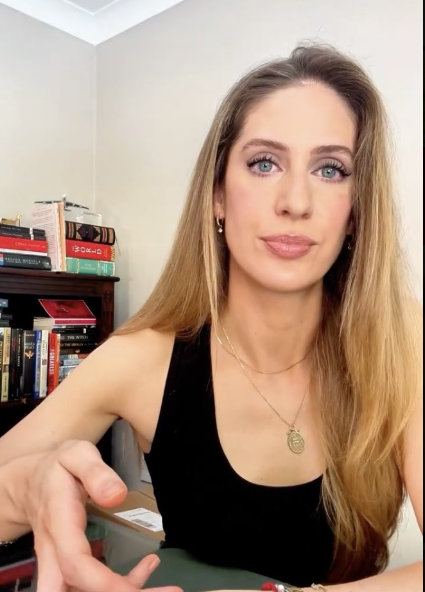
The premise of the show is exactly what the title suggests: history told without the sanitization, the simplification, or the presentism that often makes conventional historical content feel either dry or dishonest. Each episode takes a historical topic and explores it with the depth and rigor that the subject deserves. Episodes have covered the history of NATO, the roots of apocalyptic thinking in modern politics, the origins of the Academy Awards, the complex history of Iran, and other subjects that connect directly to things happening in the world right now.
This is a meaningful creative and intellectual project for several reasons. It allows Bianca to bring her academic background in history directly into her content work in a way that CNN journalism rarely permitted. The daily news cycle at a major network does not leave much room for the kind of contextual depth that genuine historical analysis requires. History Uncensored creates that room by design.
The show also addresses something that a lot of people sense but rarely articulate: the modern news environment is very good at reporting what is happening and very poor at explaining why it matters in light of what has happened before. Events get covered in isolation, stripped of the historical context that would make them comprehensible. History Uncensored is a direct response to that failure. It argues, implicitly in every episode, that you cannot understand the present without understanding the past, and it makes that argument accessibly and compellingly.
Her appearances on Times Radio in connection with the show have extended her reach into audiences that may not be regular YouTube viewers, and the podcast format makes the content accessible during commutes, exercise routines, and other listening contexts. The distribution strategy reflects smart thinking about how independent media actually builds audiences in 2025 and 2026.
The association with Piers Morgan Uncensored deserves a moment of attention. Piers Morgan is a divisive figure in British media, and some observers will raise an eyebrow at the brand association. But from a strategic standpoint, the Piers Morgan Uncensored network has demonstrated genuine reach and real audience engagement, particularly among viewers who feel underserved by mainstream media. For a journalist launching an independent media project, that platform provides access to an audience that would be genuinely difficult to build from scratch. Bianca has been clear that her editorial focus is on history and geopolitics, and the intellectual seriousness of the show speaks for itself.
Frank Nobilo’s Daughter
It would be incomplete to talk about Bianca Nobilo without acknowledging her father, Frank Nobilo, and the context that his career provided.
Frank Nobilo is a former professional golfer from New Zealand who competed on the European Tour and the PGA Tour with considerable success. He is perhaps best known to golf audiences through his long tenure as an analyst and commentator for CBS Sports and the Golf Channel, roles in which he combined deep technical knowledge of the game with a clear and engaging communication style.
Growing up watching a parent navigate both the competitive demands of professional sports and the communication demands of broadcast media gave Bianca an unusually practical education in both performance and presentation. Professional athletes and their families understand pressure and preparation in visceral terms. They know what it looks like to work at something day after day without immediate reward, to perform under scrutiny, and to bounce back from public failure. Those are not trivial lessons.
Frank Nobilo’s golf career also meant that the family had an international life from early on. The professional golf circuit is a genuinely global enterprise, and growing up in and around it means exposure to different cultures, different contexts, and the kind of worldview that makes international journalism feel natural rather than exotic. For someone who would go on to report from London on global events, that background was useful preparation.
The relationship between father and daughter is not something Bianca has spoken about extensively in public, consistent with her general privacy about personal and family life. But the professional parallels are striking: both are people who combined genuine technical expertise with strong communication skills, who built careers in public-facing roles, and who navigated the transition from one professional identity to another with apparent confidence and purpose.
infrastructure, when the idea of leaving a network anchor role to launch a YouTube series would have seemed like a step backward in anyone’s career. She is leaving that chapter at a time when independent digital media is increasingly where the most interesting and credible journalism is happening, and where the barriers between journalist, historian, commentator, and independent media operator have largely dissolved.
That transformation is not just about technology, though technology is obviously central to it. It is about trust. Traditional media institutions have spent the last decade hemorrhaging the public trust that made them powerful in the first place. The reasons are complicated and worth their own lengthy analysis, but the result is clear: audiences no longer default to institutional media voices the way they once did.
They look for individuals whose judgment they trust, whose intellectual commitments are transparent, and whose work consistently delivers real value. That shift has been brutal for legacy media organizations, but it has been genuinely liberating for journalists and commentators who have the credibility, the work ethic, and the entrepreneurial instinct to build direct relationships with their audiences.
Bianca Nobilo is well-positioned to thrive in that environment. She has the institutional credibility from CNN that gives new audiences a reason to take her seriously. She has the academic background that gives her work genuine depth. She has the digital presence and understanding that allows her to reach people where they actually are. And she has demonstrated, through her move to IFS and then to History Uncensored, that she is willing to take the risks that independent media requires.
She is not alone in this trajectory. Across the media landscape, experienced journalists and broadcasters are making similar transitions, building Substacks, podcasts, YouTube channels, and independent media brands that reflect their genuine interests rather than the editorial priorities of an institutional employer. But not all of them succeed, and the difference between those who build something lasting and those who fade is usually about the quality and consistency of the work itself.
On that measure, the early evidence from History Uncensored is encouraging. The episodes are substantive, the production is professional, and the editorial voice is distinctive. She is not just repurposing CNN scripts for YouTube. She is doing something genuinely different, something that requires the specific combination of skills and knowledge she has been building for fifteen years.
Conclusion
Step back from the individual data points, the birthdate and the follower count and the career timeline, and what you see is a portrait of someone who has consistently made choices based on what she actually believes in and what she actually wants to build, rather than what the conventional path would have prescribed.
She was born in Auckland in 1990, grew up in the orbit of professional sports and international mobility, built serious academic foundations in history and international affairs, and then deployed those foundations in a television journalism career that put her at the center of some of the most consequential global stories of her generation. She spent nearly a decade at CNN, left on her own terms, took a surprising detour into enterprise technology, and then launched an independent media project that is the most direct expression yet of what she actually cares about intellectually.
She is thirty-five years old, turning thirty-six in May 2026. She stands somewhere between five feet three and five feet seven inches depending on which biographical database you consult. She has no publicly confirmed partner or husband, and she does not discuss her romantic life publicly. She has no reported illness and no credible health concerns in any available public record. Her net worth is not confirmed but reasoned estimation suggests meaningful financial independence built through a premium broadcast career and senior corporate employment. Her Instagram at @biancanobilo has nearly 200,000 followers and reflects the same intellectual priorities as her broader professional work.
She is the daughter of golfer Frank Nobilo, whose career modeled discipline, performance under pressure, and the value of genuine expertise. She witnessed a family member’s cardiac emergency as a student and channeled that experience into volunteering work around heart health. She is a serious person doing serious work, and she is doing it in ways that are genuinely responsive to where media, history, and geopolitics are heading in the mid-2020s.
The story of Bianca Nobilo is, in miniature, the story of what happens when genuine intellectual seriousness meets professional courage in an era when the media landscape is being remade from the ground up. She is not waiting for the institutions to figure it out. She is building the thing she wants to exist, and she is building it with the skills and credibility she spent a decade assembling.
That is a story worth following. And based on the trajectory she is on in early 2026, the most interesting chapters may still be ahead.