
Julius Mkhwanazi is one of the most talked-about figures in South African law enforcement today. Known for his rise through the ranks of the Ekurhuleni Metropolitan Police Department (EMPD) and later for the controversies surrounding his leadership, his name has become synonymous with both ambition and accountability in public service.
If you have followed South African municipal policing news in 2025, chances are you have come across his name attached to headlines that are equal parts fascinating and troubling. The Julius Mkhwanazi biography is not a simple story of success or failure. It is a genuinely layered human story about what happens when ambition meets opportunity, when authority meets temptation, and when decades of hard work collide with a moment of reckoning.
Let us walk through everything you need to know, from where he was born and how old he is today, to the allegations that shook Ekurhuleni and the questions about his family, his qualifications, and his net worth.
Julius Mkhwanazi Biography
Julius Sifiso Mkhwanazi, widely referred to simply as Julius Mkhwanazi, is a South African law enforcement officer who built what appeared to be a sterling career in municipal policing over the course of more than three decades. For most of that time, he served within the Ekurhuleni Metropolitan Police Department, a large and operationally complex institution that handles everything from traffic management and by-law enforcement to community safety and urban crime prevention across one of Gauteng’s most densely populated cities.
He climbed through that institution patiently, deliberately, and, by most early accounts, with genuine competence. He eventually reached the rank of Deputy Chief, placing him among the senior decision-makers who shaped how the EMPD operated at both the strategic and day-to-day level. That is no small achievement. The EMPD is not a small-town traffic department. It employs thousands of officers and covers a sprawling metropolitan region that includes Germiston, Boksburg, Benoni, Alberton, and several other suburban and industrial areas. Getting to the top of that structure takes serious institutional knowledge, political awareness, and operational skill.
For years, he was regarded inside the department as someone who demanded professionalism from those beneath him. He was not the kind of leader who turned a blind eye to tardiness, sloppiness, or procedural shortcuts. Colleagues have described him as firm, methodical, and sometimes intimidating in the way that effective disciplinarians often are.
Then came 2025, and everything changed.
Before we get to that, though, let us go back to the beginning, because the full Julius Mkhwanazi biography deserves to be told from the ground up.
Where Was Julius Mkhwanazi Born?
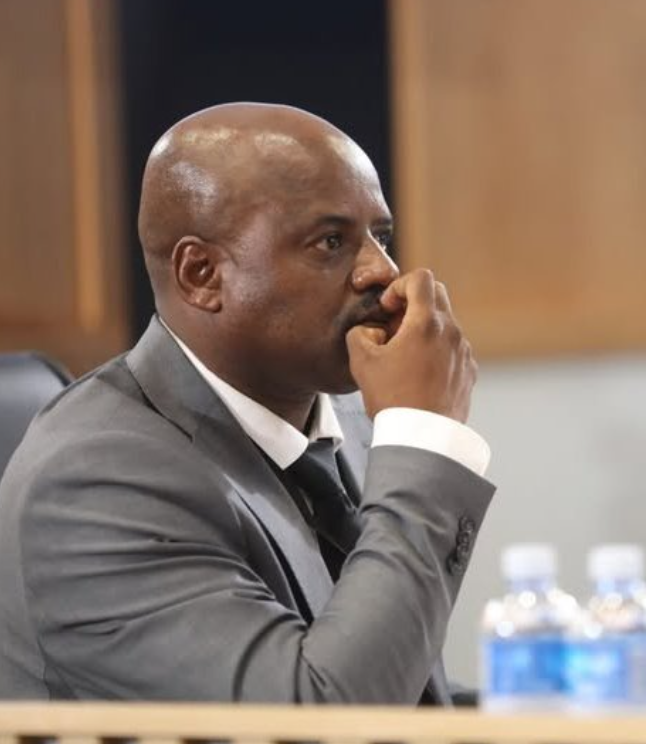
Julius Mkhwanazi was born on February 5, 1973, in KwaZulu-Natal, South Africa. His hometown sits within one of the country’s most historically significant provinces, a region that shaped the political and cultural landscape of post-apartheid South Africa in profound ways.
Growing up in KwaZulu-Natal during the 1970s and 1980s was not easy for ordinary Black South African families. Apartheid was still very much in force, and the options available to young people from modest backgrounds were limited and often deeply unfair. Access to quality education, professional training, and upward mobility required navigating a system that was designed to work against them.
Mkhwanazi’s parents were working-class people. They were not wealthy, but they were, by all accounts, intentional about the values they passed on. His father was known for his work ethic, a man who believed that showing up, doing the job right, and maintaining personal integrity were not optional virtues but absolute requirements. His mother balanced that with a quieter kind of wisdom, the sort of patient, grounded guidance that teaches a child not just how to survive difficult circumstances but how to carry themselves with dignity while doing so.
Julius absorbed those lessons. People who knew him as a child describe a young man who was not particularly boisterous or attention-seeking, but who was always watching, always thinking, and always asking questions about how things worked. He had a particular fascination with fairness and community order, which, looking back, seems like a fairly clear signal of where his life was headed.
He attended local schools in KwaZulu-Natal, completing his primary and secondary education without any notable drama. His grades were solid. He was not a prodigy, but he was consistent, and consistency, as most seasoned professionals will tell you, tends to matter more in the long run than raw talent that burns bright and then fizzles.
After finishing his schooling, Mkhwanazi made the decision that would define the rest of his adult life. He chose a career in law enforcement.
Julius Mkhwanazi Qualifications and Age: Education and Professional Training
Understanding Julius Mkhwanazi’s qualifications requires separating two things: his formal academic credentials and his professional training. In South African policing, these two streams often run in parallel, and both matter enormously.
After completing secondary school, Mkhwanazi enrolled at a South African Police Service (SAPS) training college. These institutions are structured training environments where recruits learn not just the practical mechanics of policing, such as crowd control, criminal procedure, arrest techniques, and report writing, but also the legal framework within which officers must operate. Constitutional law, the South African Police Service Act, municipal by-laws, community engagement principles, all of it forms part of the curriculum.
Mkhwanazi completed this foundational training and began his service career. But he did not stop there. As he progressed through the ranks, he pursued further qualifications, completing courses in Public Management and Administration, Leadership Development, and Security Studies. These are not cosmetic credentials. In a department as large and administratively complex as the EMPD, the ability to manage budgets, coordinate across departments, supervise large numbers of staff, and navigate legal compliance frameworks is absolutely essential for senior officers.
His qualifications gave him a genuine edge. While some officers in large municipal departments rise through sheer seniority and connections, Mkhwanazi built a profile that combined operational experience with formal administrative knowledge. That combination, field credibility plus management skill, is relatively rare and genuinely valuable in any large public institution.
As of 2025, Julius Mkhwanazi is 52 years old. He was born on February 5, 1973, which means he has spent the bulk of his adult life in uniform, a career stretching across the dying years of apartheid, the euphoric chaos of the democratic transition, the optimism of the Mandela era, and the increasingly complicated landscape of post-Zuma South African governance.
At 52, he sits in an interesting position. He is experienced enough to be deeply knowledgeable about how these institutions work from the inside. He is young enough that, under different circumstances, another decade or more of productive service might have been ahead of him. And he is old enough that the events of 2025 may very well define how he is ultimately remembered.
Julius Mkhwanazi Career Beginnings
Julius Mkhwanazi began his formal policing career in the early 1990s, a period that coincided with one of the most seismic shifts in South African history. The apartheid government was crumbling, negotiations between the ANC and the National Party were underway, and the institutions of the state, including its policing structures, were under enormous pressure to transform.
He entered the South African Police Service (SAPS) during this transitional era and began at the ground level, as every officer does, handling patrols, responding to community calls, managing traffic incidents, and learning the rhythms of daily law enforcement work. This is the unglamorous foundation of any policing career, the shift work, the bureaucratic paperwork, the moments of boredom punctuated by moments of genuine tension.
But those early years are also where the real character of a police officer gets formed. It is where you learn whether the person next to you can be trusted, where you develop instincts about people and situations that no training manual can fully teach, and where you start to understand the genuine complexity of trying to maintain order in communities that have complicated, often painful relationships with the institutions of law enforcement.
Mkhwanazi earned a reputation during these years for being precise. He did his paperwork correctly. He showed up on time. He followed procedures. These qualities sound basic, and in many ways they are, but in large public institutions where corner-cutting and informal arrangements often become normalized over time, someone who consistently does things by the book stands out.
When the Ekurhuleni Metropolitan Police Department was formally established as a separate municipal police entity, Mkhwanazi made the transition from SAPS to the new department. This move placed him at the ground floor of building a new institutional culture, a rare opportunity for any officer with leadership ambitions.
By the early 2000s, he had already been elevated to supervisory roles, overseeing teams of officers in field operations. By the mid-2000s, his career trajectory was clear: this was a man on his way up.
Julius Mkhwanazi Rise to Leadership
The appointment of Julius Mkhwanazi to the role of Deputy Chief of the EMPD was a milestone that reflected both his institutional longevity and his administrative capabilities. In that position, he was responsible for overseeing critical divisions that touched nearly every aspect of the department’s work.
Think about what that actually means for a moment. The EMPD operates across a major metropolitan region. It handles everything from noise complaints and illegal dumping violations to armed roadblocks, joint anti-crime operations with SAPS, and large-scale events management during concerts, political rallies, and sporting fixtures. Coordinating all of that requires not just operational competence but a kind of organizational intelligence that lets you hold multiple complex systems in your head at once.
Mkhwanazi brought that capability to the role. Under his supervision, the department implemented new officer training protocols, improved response times in certain areas, and strengthened relationships with community policing forums. He pushed for better attendance and punctuality standards. He oversaw joint operations with SAPS that targeted specific crime hotspots across Ekurhuleni.
He was also involved in shaping the department’s internal affairs processes, which, with considerable irony given what followed, were meant to ensure that officers who violated the rules faced appropriate consequences.
Colleagues from this period describe a man who was results-oriented and who had little patience for excuses. He pushed his subordinates hard. Some admired that. Others found it grating. That is the double-edged nature of that particular leadership style: it produces results, but it also produces resentment, and resentment, in a politically charged institutional environment, can be dangerous.
For more than a decade, though, the results spoke loudly enough to drown out the resentment. Mkhwanazi was seen as an asset to the institution, a serious officer doing serious work in a city that needed serious policing.
Is Julius Mkhwanazi Married? His Wife, Kids, and Personal Life
Yes, Julius Mkhwanazi is married. His wife is Esethu Mkhwanazi, a woman who has, by all public accounts, been a steady and private presence throughout her husband’s career. Those who know the family describe her as calm, supportive, and deeply protective of her family’s privacy.
The couple has three children together. Their names and specific ages have not been shared publicly, and both Julius and Esethu appear to have made a deliberate choice to keep their children away from the spotlight. Given the media attention that has surrounded Mkhwanazi in 2025, that decision seems both understandable and wise.
People who know the family personally describe Julius as a devoted father outside of his professional responsibilities. He is reportedly someone who, despite the demands of a senior leadership role in a large metropolitan police department, made time for his children’s school activities and prioritized family life.
Esethu Mkhwanazi has remained by her husband’s side through the turbulence of his 2025 suspension and investigation. In South African public life, where the pressure on families of suspended officials can be enormous, that kind of loyalty carries real weight. She has not made public statements or sought media attention, which itself says something about the kind of marriage they appear to have built.
Their home is in Ekurhuleni, placing them within the same community that Julius served professionally for decades. That proximity, living in the area where he worked, enforced traffic laws, and coordinated safety operations, added a layer of personal accountability to his role that purely administrative officers sometimes lack.
Outside of work and family, Julius Mkhwanazi is said to enjoy reading, spending quiet time at home, and reflecting, all of which paint a picture of an introverted personality beneath the authoritative professional exterior. He is not active on social media. He does not seek public exposure. His world, even at the height of his career, was primarily institutional and domestic.
How Old Is Julius Mkhwanazi in 2026?
Julius Mkhwanazi is 53 years old in 202. Born on February 5, 1973, he turned 52 earlier in the year, just months before the scandal that would suspend his career broke into public view.
Fifty-two is an interesting age for a law enforcement officer of his rank. It is an age at which most senior officers are either consolidating a legacy they plan to leave on their own terms, preparing for retirement, or positioning themselves for post-service consulting or advisory roles. It is not typically the age at which a person expects to be at the center of a national disciplinary investigation.
There is a kind of cruel timing to it. More than 30 years of service. A career that survived the chaotic institutional transformations of post-apartheid South Africa, the budget cuts, the political interference, the staff turnovers, the constant pressure to deliver results with insufficient resources. And then, in the final years before he might reasonably have expected a dignified exit, this.
How old is Julius Mkhwanazi? He is 52, and in many ways, that number now carries a weight that goes far beyond calendar years. It represents the sum total of a career in the balance.
The 2025 Suspension: What Actually Happened?
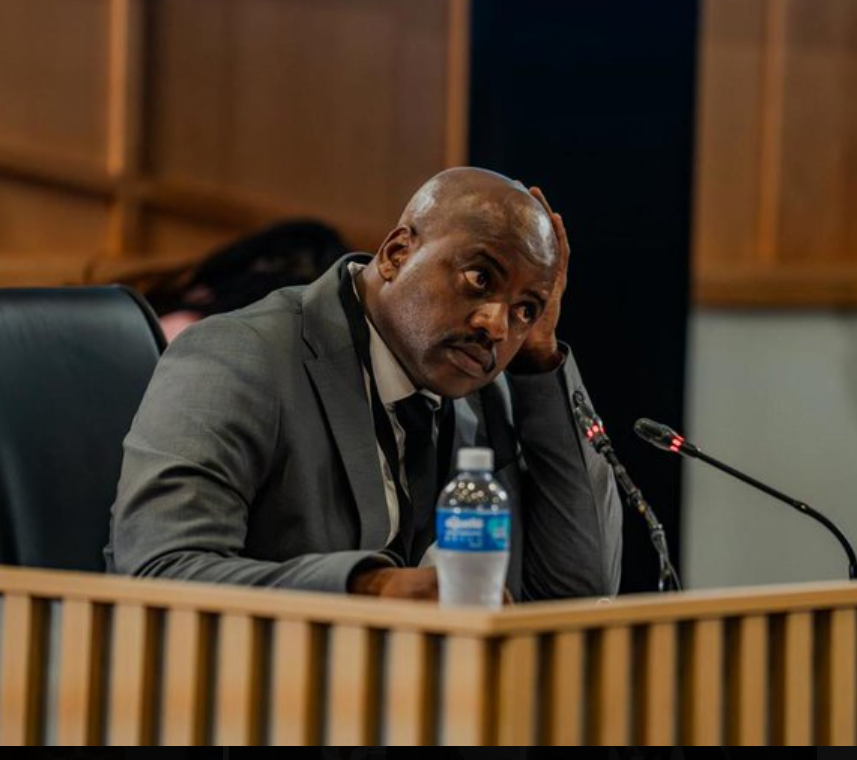
This is the part of the Julius Mkhwanazi biography that most people want to understand, and it deserves a thorough and honest treatment rather than a sensationalized summary.
In 2025, the City of Ekurhuleni formally announced the suspension of its Deputy Chief of Police pending an investigation into several serious allegations. The announcement confirmed what had already been quietly circulating in municipal government circles for some time: that something had gone significantly wrong within the upper ranks of the EMPD, and that Mkhwanazi was at the center of it.
The allegations fell into several distinct categories, each serious in its own right.
Irregular Promotions on a Massive Scale
The most administratively damaging allegation concerned promotions. Reports indicated that over a period of approximately three months, Mkhwanazi had approved more than 55 officer promotions within the department. That number alone would raise eyebrows. Fifty-five promotions in three months is not a routine staffing adjustment. It is a wholesale reshaping of the organizational hierarchy.
What made it worse was how those promotions were reportedly processed. Proper procedures in public sector appointments require that vacancies be openly advertised, that candidates be assessed through interviews and panels, and that unions be consulted as part of transparent processes. These requirements exist not just as bureaucratic formalities but as actual safeguards against favoritism, nepotism, and the kind of closed-loop patronage networks that hollow out public institutions from within.
According to investigators, those procedures were not followed. The promotions allegedly went through without open advertisement, without panel interviews, and without the union consultation that employment agreements required. Mkhwanazi’s name appeared as the authorizing signature on the relevant paperwork.
He maintained, during his testimony before the Madlanga Commission of Inquiry, that these decisions were administrative in nature and motivated by operational need. His critics were unconvinced.
Unauthorized Blue Light Authorization
The second allegation was perhaps more visually striking in terms of what it signaled about the culture within the department. Blue lights on vehicles in South Africa are tightly regulated. They are reserved for emergency service vehicles and official government vehicles operating in specific capacities. They are not decorations. They grant the vehicles that carry them genuine traffic privileges, including the right to pass through red lights and expect other road users to yield.
Investigators found evidence suggesting that Mkhwanazi had authorized private vehicles to carry and operate blue lights. These vehicles were reportedly not EMPD vehicles but privately owned cars connected to individuals or businesses that had no legitimate entitlement to that designation.
If true, this represented not just a procedural violation but a potentially dangerous misuse of a safety framework. Blue lights on the road carry implicit authority. When that authority gets handed out to private parties for reasons that bypass proper process, it corrupts the very system of public trust that emergency lighting is meant to support.
Questionable Contracts Without Proper Council Approval
A third stream of allegations focused on procurement and contracting. Investigators identified agreements between the EMPD and private companies that appeared to have been entered into based solely on Mkhwanazi’s signature, without the council-level authorization that the value and scope of those agreements would ordinarily have required.
In South African public procurement law, transparency and committee authorization exist precisely to prevent individual officials from making unilateral decisions that could benefit particular private parties. The suggestion that contracts were signed around rather than through those processes raised questions about whose interests were being served.
The Copper Theft Allegation
Perhaps the most alarming claim was the one connecting EMPD officers under Mkhwanazi’s command to the theft of copper from a private workshop. Copper theft is a serious and widespread problem in South Africa, one that cripples infrastructure projects, disrupts services, and generates enormous criminal revenue. The involvement of uniformed officers, under the oversight of a senior official, in that kind of theft would represent a profound institutional betrayal.
Investigators reportedly obtained CCTV footage showing EMPD members at the scene of the alleged theft. The question of whether Mkhwanazi had direct knowledge of or involvement in that specific incident remains contested. His defense was that he bore no personal responsibility for the independent actions of officers operating in the field. His critics argued that the culture of impunity within which such actions could occur was itself the product of leadership failures at the top.
The Madlanga Commission
The Madlanga Commission of Inquiry was established specifically to examine misconduct within local government policing structures, and Julius Mkhwanazi was called to testify before it in 2025. His testimony attracted significant public and media attention.
During his appearance, he acknowledged being the sole signatory on several of the controversial documents at the center of the investigation. That admission was significant because it placed him directly in the chain of authority for the decisions being questioned. You cannot sign documents and then claim ignorance of their contents, and Mkhwanazi did not try to make that argument.
What he argued instead was that his decisions were administratively motivated, made in what he described as the interest of operational efficiency. He maintained that he had no personal financial stake in the promotions, contracts, or authorizations being examined, and that the allegations of corruption were either mischaracterizations of legitimate administrative decisions or the products of institutional politics within a department where internal rivalries and factional interests had long existed.
That last point is worth taking seriously, not as an excuse but as context. Large metropolitan police departments are not politically neutral environments. They are institutions where significant resources, contracts, and careers are at stake. Internal factionalism, career jealousy, and attempts to undermine senior officers through disciplinary proceedings are not unique to South Africa. They exist in police departments around the world.
Whether that context exonerates Mkhwanazi entirely, partially, or not at all remains a question that the formal investigation process must answer. But the possibility that some of what he faced was politically motivated does not automatically mean that all of the allegations were fabricated.
The Commission’s work continued through the latter part of 2025, and its findings are anticipated to have significant consequences for the future direction of the EMPD.
Julius Mkhwanazi Net Worth
As of 2026, Julius Mkhwanazi’s net worth is estimated at approximately R8 million, which translates to roughly $420,000 USD at current exchange rates. This figure represents the accumulated value of a career that spanned more than three decades in public law enforcement.
It is important to place that number in context. For a senior officer who has spent his entire working life in public service, R8 million is a figure that reflects steady income, pension accumulation, and modest property ownership rather than the kind of wealth that would suggest unexplained enrichment. South African senior municipal officers earn competitive salaries, and over 30-plus years, with discipline around saving and investment, a net worth in that range is entirely consistent with legitimate career earnings.
What he reportedly owns includes a family home in Ekurhuleni and personal vehicles. His lifestyle, by the accounts of people who know him, has not been flashy or ostentatious. He did not develop a reputation for conspicuous consumption, which is often one of the first visible signs of corruption in public office.
Financial investigators reviewing his affairs as part of the broader inquiry into his conduct have reportedly been examining all transactions made during his tenure as Deputy Chief. As of the time of writing, no confirmed evidence of illegal enrichment has been publicly presented by those investigators. That does not mean the investigation is complete, but it is a relevant data point.
The estimate of R8 million in net worth, while necessarily approximate given that such figures are rarely confirmed with precision for non-listed individuals, places Julius Mkhwanazi solidly in the upper-middle range of South African public servants, comfortable by most standards, but not extraordinarily wealthy by the standards of those who have genuinely exploited public office for personal gain.
Julius Mkhwanazi and the Broader Crisis in South African Municipal Policing
To fully understand the Julius Mkhwanazi biography and its significance, you have to understand the environment in which his career unfolded and his fall from grace occurred.
South African municipal policing has faced persistent and serious challenges for years. Metropolitan police departments across the country struggle with underfunding, political interference from municipal governments that see policing as a political tool, internal factionalism, and the constant pressure of trying to deliver safety outcomes in communities that are simultaneously experiencing poverty, unemployment, and the downstream effects of decades of structural inequality.
In that environment, the boundaries between legitimate administrative authority and the abuse of position can become genuinely blurry. Not because corruption is inevitable, it is never inevitable, but because the institutional frameworks that are supposed to create clear boundaries are themselves often weak, underfunded, or undermined by political dynamics.
Senior officers in that environment face a particular kind of temptation. They hold real power. They make decisions that affect careers, contracts, and communities. And the formal accountability structures, the oversight committees, the audit processes, the union consultations, sometimes feel like obstacles rather than safeguards, particularly when an officer is convinced that they know what the institution needs and that the formal processes are too slow or too political to deliver it.
That kind of reasoning, well-intentioned or otherwise, is exactly how institutional corruption often begins. Not with a deliberate decision to be crooked, but with a series of smaller decisions to work around processes that feel cumbersome, each one building on the last until the cumulative weight of those decisions becomes impossible to justify.
Whether that is what happened in Julius Mkhwanazi’s case, the investigation will determine. But the story he represents is bigger than any one person. It is a story about the systems within which even capable and initially principled people can go wrong.
Public Reaction: Hero or Villain?
The public response to the Julius Mkhwanazi scandal in South Africa was, predictably, divided.
For many ordinary citizens, particularly those living in Ekurhuleni and those who follow local government accountability closely, the allegations confirmed what they had long suspected about how power operates in metropolitan police departments. Irregular promotions, unauthorized privileges for connected individuals, suspicious contracts signed without oversight: these are not abstract institutional failures. They have real costs, borne by taxpayers and by communities that deserve better-resourced and more accountable policing.
The outrage in that segment of public opinion was genuine and understandable.
But there was also a vocal group, including some within the policing community and municipal governance circles, who took a more skeptical view of the allegations. These voices pointed to the internal political dynamics of the EMPD, the long history of factional conflicts within the department, and the possibility that a disciplined, demanding officer who had made enemies over the years was now being targeted through processes that were dressed up as accountability but were actually about something else entirely.
Neither of these perspectives is automatically wrong. Both contain elements of truth that honest observers need to take seriously. Accountability matters, and so does the integrity of accountability processes themselves.
South African media coverage, from News24 to TimesLIVE to Daily Maverick, treated the story with the weight it deserved, framing it not just as a personal scandal but as a window into deeper systemic problems in how South Africa governs its municipal police departments and how it handles misconduct when it reaches the senior levels of those institutions.
What the Julius Mkhwanazi Story Teaches Us About Leadership in Public Service
Every biography worth reading contains lessons, not just about the person at its center but about the broader human conditions that their life illuminates. The Julius Mkhwanazi biography is no exception.
Longevity in a role is not the same as effectiveness. Mkhwanazi spent decades building institutional knowledge and credibility. But longevity can also breed a dangerous kind of comfort with existing power structures and an assumption that one’s own judgment has earned the right to operate above process. It had not. It never does.
Reputation is built slowly and can collapse quickly. More than 30 years of steady, disciplined service created a professional identity that colleagues respected and superiors trusted. That identity, once the allegations emerged, became almost immediately contested. The speed with which reputations unravel under pressure is one of the harder lessons that public life teaches.
The systems around leaders matter as much as the leaders themselves. Mkhwanazi operated within an institutional environment that apparently allowed a single senior officer to approve 55 promotions in three months without triggering automatic oversight. That is not just a personal failure. That is a systemic failure. Strong institutions do not rely on the integrity of individuals alone. They build checks that catch problems regardless of whether the person at the top is honest or dishonest.
Personal life and professional conduct are connected by the same values. By all accounts, Julius Mkhwanazi the husband and father operated with genuine care and integrity. The gap between how someone lives at home and how they exercise power at work is one of the defining moral challenges of leadership. Consistency across both domains is what real integrity actually looks like.
The thin line between duty and overreach is crossed in small steps. If the allegations against Mkhwanazi reflect what actually happened, it is unlikely that he woke up one morning and decided to corrupt his institution. These things tend to happen incrementally, one justified shortcut at a time, until the cumulative picture becomes something that the individual might not recognize as their own doing.
Julius Mkhwanazi’s Legacy
As of late 2025, Julius Mkhwanazi remains suspended, and the formal investigation process is ongoing. The Madlanga Commission of Inquiry continues its work. Financial investigators are examining his transactions. The EMPD has had to navigate the institutional disruption of losing its Deputy Chief in circumstances that have generated considerable negative publicity.
What his legacy ultimately looks like depends on how that process concludes. There are several possible trajectories.
If the investigation fully substantiates the allegations against him and he is found guilty of corruption and misconduct, his legacy will be defined primarily by those findings. Decades of genuine service will be overshadowed by the events of his final years in post, and his story will become a reference point for discussions about the dangers of unchecked authority in municipal policing.
If the investigation reveals that the allegations were significantly overstated or that the process was tainted by political motivations within the institution, his legacy becomes something more complicated: a capable officer who was brought down not by his own failures but by the institutional politics of a department that could not contain its own factional conflicts.
And there is a third possibility, perhaps the most realistic one in complex institutional cases like this: a mixed finding that acknowledges some genuine procedural failings while also recognizing that the worst allegations were exaggerated or unprovable. In that scenario, Mkhwanazi’s legacy becomes a grey space, neither fully redeemed nor fully condemned.
What is certain is that his name will remain part of the conversation about accountability in South African municipal policing for years to come.
Julius Mkhwanazi Age, Background, and the Full Picture
| Category | Details |
|---|---|
| Full Name | Julius Sifiso Mkhwanazi |
| Date of Birth | February 5, 1973 |
| Age in 2025 | 52 years old |
| Place of Birth | KwaZulu-Natal, South Africa |
| Hometown | KwaZulu-Natal (raised), later Ekurhuleni (career and family base) |
| Qualifications | South African Police Service College training, courses in Public Management, Leadership and Administration, and Security Studies |
| Career | South African Police Service (SAPS), then Ekurhuleni Metropolitan Police Department (EMPD), rising to Deputy Chief |
| Marital Status | Married to Esethu Mkhwanazi |
| Children | Three children (names and ages kept private) |
| Net Worth (2025 Estimate) | Approximately R8 million (around $420,000 USD) |
| Current Status | Suspended pending investigation by the Madlanga Commission of Inquiry |
| Known For | Three decades in South African municipal policing, significant administrative role in the EMPD, and the controversial 2025 disciplinary proceedings |
Conclusion
South Africa in 2025 is a country still working through the long and difficult process of building institutions that genuinely serve its people. The police, at every level from the national SAPS down to metropolitan departments like the EMPD, are central to that project. Without functional, accountable, and trusted policing, everything else that depends on public order and safety becomes harder: investment, job creation, community health, education, and the ordinary day to day lives of millions of people who simply want to live and work without fear.
The story of Julius Mkhwanazi matters because it shows, in concrete human terms, both how capable individuals can genuinely contribute to that project and how the systems meant to keep them accountable can fail, sometimes catastrophically.
It matters because the people of Ekurhuleni deserve to know what happened inside an institution that was supposed to protect them.
It matters because young people entering public service, many of them inspired by the possibility of making a real difference in their communities, need honest stories to learn from. Not sanitized hero narratives, but real stories about real human beings navigating real pressures, making real decisions, and facing real consequences.
And it matters, frankly, because it is simply a compelling human story. A man from modest beginnings in KwaZulu-Natal who spent more than 30 years building something within a difficult, underfunded, politically fraught institution, who reached the heights of that institution, and who now finds himself at 52 navigating the most public and consequential challenge of his life.
Whether Julius Mkhwanazi ultimately emerges from this period as a man vindicated or a man whose failures caught up with him, his biography will remain one of the more instructive case studies in what leadership in South African public service can look like, and what it must, always, always guard against.
That story does not have a clean ending yet. But it is a story worth understanding fully, which is exactly why it deserves to be told with the depth and honesty that it demands.